Teaching Central America Advisors
The project benefits from the scholarship and feedback from a noted team of advisors inclusive of artists, authors, scholars, and community members.
Jorge Argueta
Poet and award-winning author of dozens of popular books for children and young adults, including Caravan to the North, Sopa de frijoles/Bean Soup, and A Movie in My Pillow/Una pelicula en mi almohada. Learn more.
Mario Bencastro
Award-winning writer and artist. His books include Odyssey to the North, A Promise to Keep, Waves of the East River, and El Niño de Maíz / The Boy of Maize. Bio.
Wendy Bermúdez
Bachelor’s degree in Urban Studies and Teaching from Barnard College in New York City. Bermudez has a master’s degree in Bilingual/Bicultural Education from Teachers College at Columbia University and a second master's in Spanish Language and Culture from Universidad de Salamanca in Spain. Bermúdez received her Administration and Supervision endorsement from Longwood University and currently serves as the Dual Language Immersion Coordinator for Arlington Public Schools.
Jorge E. Cuéllar
Assistant professor at Dartmouth College and a scholar of politics, culture, and daily life in modern Central America. His research and teaching focus on Central American Studies, Cultural Studies, Race, Migration, and Critical Social Theory. Learn more.
Cintia Marizel Bernárdez García
A proud member of the Garífuna community of Santa Rosa de Aguan, Colón, Honduras. She has won many awards for her work as an educator, teacher trainer, social scientist, and writer. Her literary, anthropological and educational work aims to celebrate and preserve Garífuna cultural heritage, folklore, and history. Her children's books include Walȋha garífuna 1, Walȋha garífuna 2 (Leamos Garífuna 1 y 2), Colorear y aprender animales en lengua Garífuna, Wabahüda lau garífuna (Contemos en Garífuna), and Wagücha.
M. Yianella Blanco
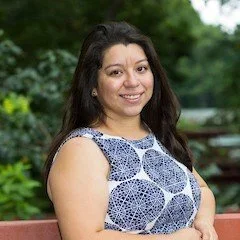
Assistant professor in the School of Education. Dr. Blanco’s research interests focus on the teaching and learning of Latine/x histories and experiences, particularly those of Central America(ns) and how those intersect with American empire. Blanco’s research draws from community-based and participatory action research methods. Her most recent collaborative research project features work with Central American-American educators where, with the use of testimonios, pláticas and encuentros, they introduce the idea of “curriculum dreaming and building” to imagine school spaces in which Central American migrant youth feel seen, supported and loved. Blanco draws from critical, liberatory, and healing-centered practices in her work. Read more.
Floridalma Boj Lopez
Assistant professor in the UCLA Department of Chicanx and Central American Studies. Dr. Flori Boj Lopez (she/her) uses a transborder approach to analyze the experiences of Maya migrants as they cross settler colonial borders and encounter distinct racial logics in the United States to deeply consider how they organize and respond to these structures of violence. She’s led professional development for educators in multiple states and continues to partner with projects that seek to bring Central American Studies to K-12 classrooms in Los Angeles. Read more.
Bree'ya Brown
Panamanian American Digital Archivist at the University of North Texas. As a librarian archivist, Bree’ya Brown (she/her/ella) focuses on the long-term preservation and accessibility of digitized and born-digital archival materials in a variety of formats. She also teaches Black Latin American courses with a concentration on human agency and the environment. Her research interests and publications center around Central American Studies, Library Science, and Archival Studies.
Marcy Campos
Volunteer with the Teaching Central America campaign. Campos has worked in Central and South America on participatory evaluation projects, the development of women’s leadership, and strengthening community-based organizations. She was on staff at the National Council of La Raza (now UnidosUS) and American University where she headed the Center for Community Engagement & Service and teaches a class called “The Latino Community of the D.C. Metro Area.” Bio.
Jennifer A. Cárcamo
Salvadoran independent filmmaker and scholar. Jennifer A. Cárcamo is a University of California President’s and Andrew Mellon Postdoctoral Fellow at UC Irvine in the Chicano/Latino Studies Department, where she is completing her book manuscript Historias Prohibidas del Istmo: Central American Communists during the Rise of Twentieth Century Fascism, 1920-1940. She holds a PhD in History from UCLA and an MA in Documentary Film and History from Syracuse University. Her research has been published in the Latin American Law Review, Anuario de Estudios Centroamericanos, Journal of Race and Class, and Johns Hopkins Feminist Formations, where she was awarded “Best Paper” in 2024 by the National Women’s Studies Association (NWSA). She is the director of the films Eternos Indocumentados and Children of the Diaspora. Read more.
Melanie Cerritos
Instructional Specialist, DCPS Early Childhood Education Division
Fayette (Faye) Colon
Diversity, Equity, Inclusion, Belonging, and Justice coach in Louisville, Kentucky. Before moving to Louisville, Colon was the founding coordinator for Teaching for Change’s D.C. Area Educators for Social Justice and a high school teacher in New York City. In Louisville, she leads professional developments and works on curriculum with early childhood and elementary school teachers at the Virginia Chance School. She is a Zinn Education Project Prentiss Charney Fellow. Read more.
Ingrid T. Colón, Ed.D.
Education research program manager at UnidosUS. Dr. Ingrid T. Colón’s research focuses on the experiences of recently arrived immigrant families and their children in public schools, English learners, culturally and linguistically responsive classrooms, and dual language education. Learn more.
Ariana A. Curtis, Ph.D.
Curator for Latinx History and Culture at National Museum of African American History and Culture. TED Talk. Bio.
Anthony Fontes
Assistant Professor, School of International Service, American University. Bio.
Juan Pablo Gómez
Juan Pablo Gómez works at the Latin American Library, Tulane University. He has a Ph.D. in Latin American Cultural and Literary Studies from Ohio State University and an M.A. in Social Sciences from the Latin American Faculty of Social Sciences (FLACSO). He has held teaching and research positions at the Institute of Nicaraguan and Central American History, at Central American University (IHNCA-UCA) in Managua, and at the Association for the Advancement of Social Sciences (AVANCSO) in Guatemala. His research interests include Central American and Nicaraguan history, culture, and memory.
Ana Sol Gutierrez
First Latina and Salvadoran elected official to the Maryland General Assembly. Bio
Stephanie M. Huezo, Ph.D.
Dr. Huezo is assistant professor of history at Fordham University. Her research focuses on community organizing, Central American revolutions, and immigrant activism. She is a member of the Editorial Board of Popular Education Liberates. Learn more.
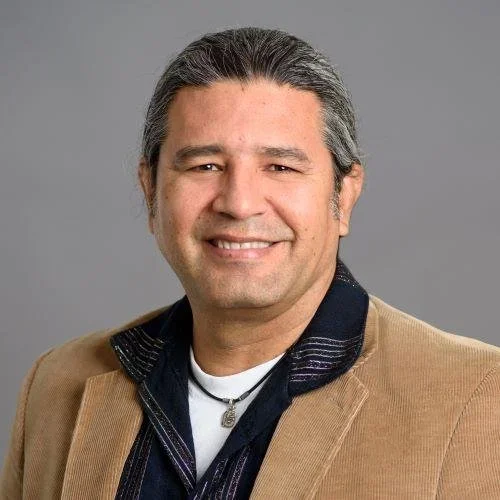
Emil’ Keme (aka Emilio del Valle Escalante) is an Indigenous K’iche’ Maya scholar from Iximulew (Land of Corn, and the K’iche’ name for Guatemala), and professor of English and Indigenous studies at Emory University. He is a first-generation college graduate. His teaching and research focus on contemporary Indigenous literatures and social movements, Central American-American literatures and cultures, and postcolonial and subaltern studies theory. His books include Le Maya Q’atzij/Our Maya Word. Poetics of Resistance in Guatemala (2021; Spanish, 2020 and 2022) and Maya Nationalisms and Postcolonial Challenges in Guatemala (2009; Spanish 2008). Keme is a co-founding member of the binational Maya anti-colonial collective, Community of Maya Studies, Ix’balamquej Junajpu Wunaq’, and volunteers as a cultural advisor for the International Mayan League in Washington, D.C. He is also a trustee of the Smithsonian’s National Museum of the American Indian.
Lauren Markham
Reporter, writing teacher, and author of The Far Away Brothers: Two Young Migrants and The Making of an American Life. (Available also in a young readers edition.) Her work most often concerns issues related to youth, migration, the environment, and her home state of California. Learn more.
Cindy Mata
Cindy Mata is a proud Guanaca, who was born in El Salvador and moved to the United States as a young child. She is a former high school and middle school history teacher, and served as the director of the University of California, Irvine (UCI) History Project. Her work involves providing high-quality professional development for history and Ethnic Studies educators in California. A particular area of focus of her work and academic pursuits focuses on how to best infuse Central American Studies in K–12 classrooms. Read about the Framework for Teaching Central American Studies in K–12 that she co-authored.
Paul Joseph López Oro
Dr. Paul Joseph López Oro is the author of the forthcoming manuscript Indigenous Blackness: The Queer Politics of Self-Making Garifuna New York. This is a critical ethnography on how gender and sexuality shape the ways in which trans-generational Garifuna New Yorkers of Central American Caribbean descent negotiate, articulate, and perform at the intersections of their multiple subjectivities as Black, Indigenous, and Central American Caribbean Latinxs. Read more.
Yajaira M. Padilla
Professor of English and Latin American and Latino Studies at the University of Arkansas, Fayetteville. Her research centers on Central American cultural and literary studies and Central Americans in a U.S. Latino context. She is the author of Changing Women, Changing Nation: Female Agency, Nationhood, and Identity in Trans-Salvadoran Narratives (SUNY 2012), From Threatening Guerrillas to Forever Illegals: US Central Americans and the Cultural Politics of Non-belonging (University of Texas Press 2022), as well several articles and book chapters.
Claudia A. Portillo
Co-founder, Central American Historical and Ancestral Society of California
Nicole Ramsey
Interdisciplinary cultural studies scholar specializing in the intersections of race, gender, nation, and diaspora in Central America and the Caribbean. Nicole Ramsey is an assistant professor of Latina/o Studies and Women’s, Gender, and Sexuality Studies at the University of Texas at Austin. Her research critically examines how Black Belizeans, including Creoles and Garinagu, navigate identity, belonging, and citizenship through national commemoration, digital spaces, migration, and tourism. Her current book project, Under the Shade I Flourish, explores Belize as a critical site for understanding Black diaspora dynamics in Central America, focusing on how Black and Indigenous communities perform identity within the framework of a postcolonial, multicultural state. She has published in Callaloo and Small Axe. She is the co-organizer and co-founder of the Black Central Americas Project, a digital public humanities initiative designed to provide a transdisciplinary and transnational platform to foster discourse and host innovative programming in the field of Black Central American Studies. As a community cultural archivist engaged in public scholarship and community-centered work, she works to collect and preserve oral histories of Caribbean and Black Central American populations in Los Angeles and California more broadly.
Ana Patricia Rodríguez
Associate professor in the Department of Spanish and Portuguese and U.S. Latina/o Studies at the University of Maryland, College Park. She is the author of Dividing the Isthmus: Central American Transnational Histories, Literatures, and Cultures and Avocado Dreams: Remaking Salvadoran Life and Art in the Washington, D.C. Metro Area. Learn more.
Patrick Scallen
Historian of the Salvadoran immigrant population in the metropolitan Washington, D.C. area. Drawing heavily upon oral and written sources, he situates Salvadoran narratives in the context of national debates on immigration reform, US Cold War foreign policy in Central America, domestic social movements, and the racial milieu of late-twentieth-century Washington, DC. Patrick Scallen’s oral histories are supported by Humanities DC and the DC Oral History Collaborative and have been digitally archived at the DC Public Library. A lifelong educator and District resident since 2004, he has taught undergraduate and graduate courses in migration studies, Latin American history, and U.S. Latinx history at Georgetown University, George Washington University, and Catholic University.
Viky Sosa
ESOL teacher, Silver Spring International Middle School, MCPS
Miriam Elizabeth Villanueva
Latin American historian with a specialization in Latin American dictatorships during the Cold War, with a particular focus on the Panamanian military regime's cultural policy to nationalize the Panama Canal during the height of the US-USSR conflict. Her approach to research incorporates interdisciplinary methods, cultural theory, and oral histories conducted over five years. Through her work, she aims to shed light on the experiences of Panamanian intellectuals and artists. Read more.
Melanie White
Assistant Professor of Afro-Caribbean Studies in the Department of Black Studies and the Women’s and Gender Studies Program at Georgetown University. Her research examines the intersections of Blackness, Indigeneity, gender, and sovereignty in Caribbean Central America. Her first book manuscript, Sovereign Mosquitia: Intimate Coloniality and Black and Indigenous Women’s Refusal, traces Black, Indigenous, and Afro-Indigenous women’s political organizing, cultural production, and anticolonial practices on the Miskitu Coast from the seventeenth century to the present. Drawing on extensive archival research and visual culture analysis, the book reveals how intimate colonial violence has deeply shaped the imperial borderlands of the far western/Central American Caribbean, as well as how Mosquitian women have crafted a vision for the region rooted in intimate, rather than settler, sovereignty.
Kevin A. Young
Associate professor of history at the University of Massachusetts Amherst. Young is the author of a number of books, including Abolishing Fossil Fuels: Lessons from Movements That Won. His research interests include revolutionary mobilization in El Salvador in the 1970s, the U.S.-Central America solidarity movement of the 1970s–90s, peasant politics in mid-twentieth-century Bolivia, and recent U.S. climate politics. Read more.
In Memory
Muriel Hasbun
Artist, educator, laberinto projects. Spotlight
Organizations are listed for identification purposes only.