
Teaching Central America Week in California: 2022-2025
Diverse Stories in a Kindergarten Classroom
Abbie Phillips, Kindergarten teacher at Oceano Elementary School in Foster City, California, made it a priority to foster a deep cultural and geographical understanding of the Central American region through their introductory history unit. She used colorful maps, songs, and stories to highlight the similarities and differences of the countries in the region. Phillips shared:
My lessons on El Salvador were centered around its history, traditions, and people. I incorporated diverse stories, including tales (when discussing Central American history) of the country’s rich folklore and inspiring figures, ensuring the students could relate to the content and understand the broader global context.
Phillips emphasized the importance of social justice, specifically teaching through the lens of equality, respect, empathy and understanding.
This was especially significant when teaching about Central American nations, as many students could identify with themes of migration, community, and resilience.
I included stories and lessons that represented the voices of important activists from the region. By doing so, I aimed to inspire empathy and a sense of responsibility for creating a fairer world in my students, encouraging them to see social justice as an integral part of their education and worldview. [2025]
Berkeley Students Link Oral Storytelling to Mural Visits
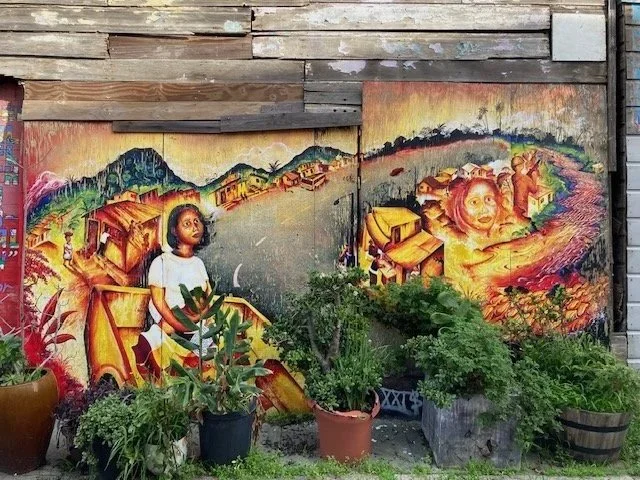
Aida Garcia-Pons, an elementary language teacher at the Black Pine Circle School, used one of the videos from the lesson, Cultural Identity Preservation Through Storytelling: La Tradición de los cuentacuentos. She wrote:
I showed my 5th grade students la entrevista de Abuelita Gladys. Our school teaches Spanish as a World Language, so our students are not native Spanish speakers and this video, though challenging, was excellent and very well-received. I'm planning on using it again in future years also with upcoming 5th graders. With the video Entrevista a Abuelita Gladys the students got to watch the video 3 times. Once as an introduction, the second time to answer the questions in the handout I'd prepared (they were allowed to write the answers in English) and the third time to check their answers.
Last year I took this same class on a field trip to learn about the murals in the Mission district of San Francisco. One of the murals was precisely of el Salvador and the war and what the artist had left behind. The students made that connection.
Later this year we'll do another mural tour in San Francisco. Before that, we will also watch Yesenia's story in Spanish with English subtitles. The students will be able to link Yesenia's and Glady's stories to what we learn in the Mission district.
This will be an ongoing unit as the students explore social issues in our local communities in their social studies class and as they hold socratic seminars throughout the year. [2024]
Lesson Using Solitio in Los Angeles
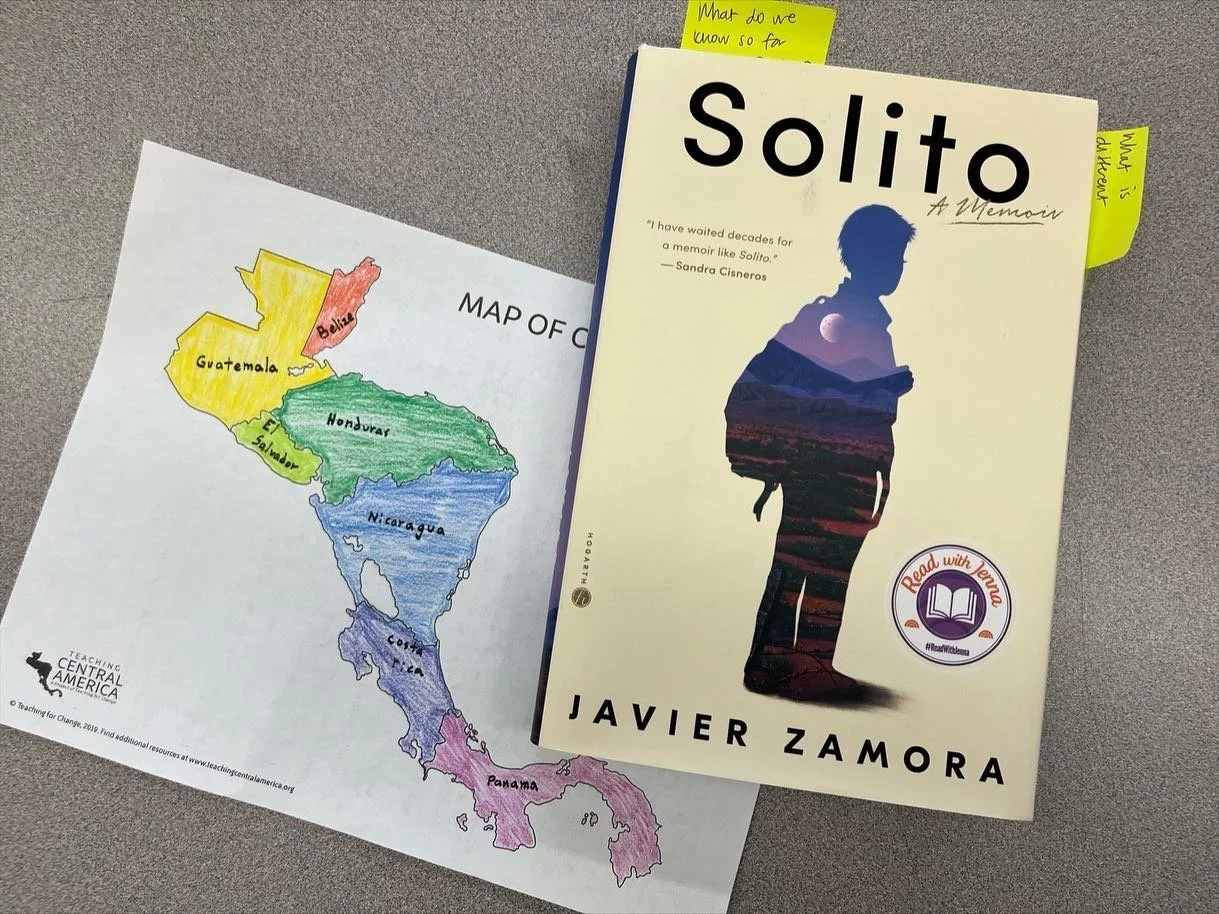
Sarah Ballister, an ELA teacher at Dodson Middle School (LAUSD), learned about and decided to participate in Teach Central America Week when signing up to attend the Indigenous Peoples’ Day Teach-In sponsored by Teaching for Change and the National Museum of the American Indian. The teach-in featured a workshop on Indigenous Central America. Said Ballister,
Earlier in my career I would have let days like these pass me by, because I was concerned about doing it “right” or perfectly. But if I wait until I can do something perfectly, I might be waiting a long time, and so will my students.
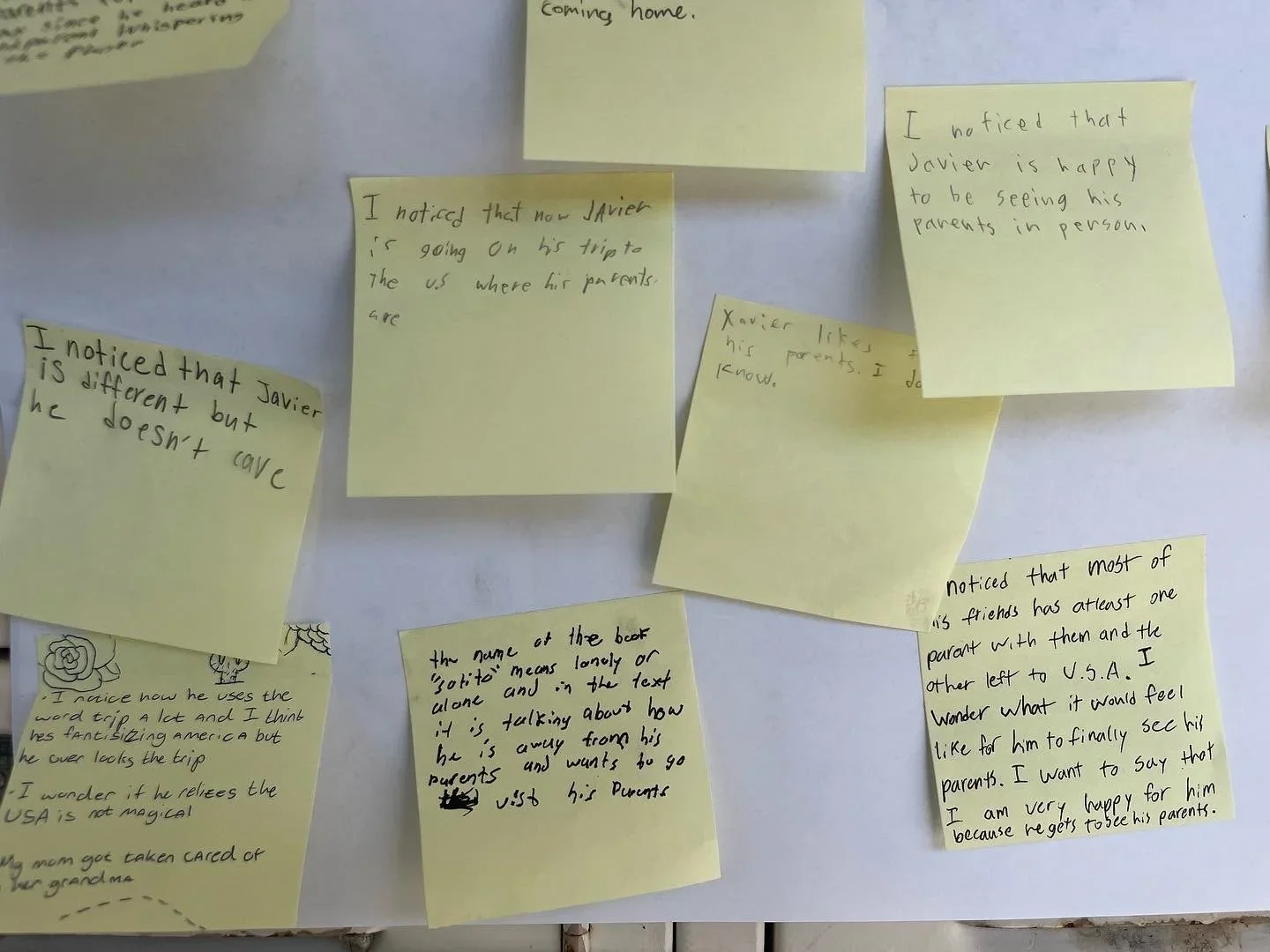
Ballister used materials shared by Teaching for Change to label a map of Central America using geographical and historical clues, then did an interactive read-aloud of an excerpt from Javier Zamora’s memoir, Solito. Students responded to the text using “I notice. . . ” “I wonder. . .” and “I want to say that. . .” One student wrote,
I want to say that I experienced this before, this story is a mirror for me. [2022]