
Teaching Central America Week in Virginia: 2022-2025
Abuela’s Weave Activities
Michelle Suchenski, an Instructional EL Specialist at Polk Elementary School in Alexandria, Virginia, used Abuela’s Weave to teach about how cultural traditions are passed down, to explore visual arts and the geography of Central America, and to make text-to-self connections while reading. Outside of the classroom, Michelle promoted Teach Central America in their school as part of Latinx Heritage Month. They did read alouds of Abuela’s Weave, while integrating visual and language arts during the week’s activities. [2025]
Researching Traditional Foods, Music, and Festivals
Elementary school teachers Frewini Haile and Emily Villazon at Mount Vernon Community School in Alexandria, Virginia taught their students about countries in the region. They had students identify countries in Central America and learn about the geographical features that have shaped traditional ways of planting and harvesting crops since pre-conquest times. They shared:
In my classroom, I have been working with students to research traditional foods, music, and festivals from countries like Guatemala, Honduras, Nicaragua, El Salvador and Costa Rica. Each group created a visual poster board display presentation that included visuals, important cultural artifacts in conjunction with student presentations, which they shared during our Hispanic Heritage Fiesta. Finally, students have been learning some of the rich visual arts, musical and dance traditions of the region. [2025]
Lesson on Rainbow Weaver
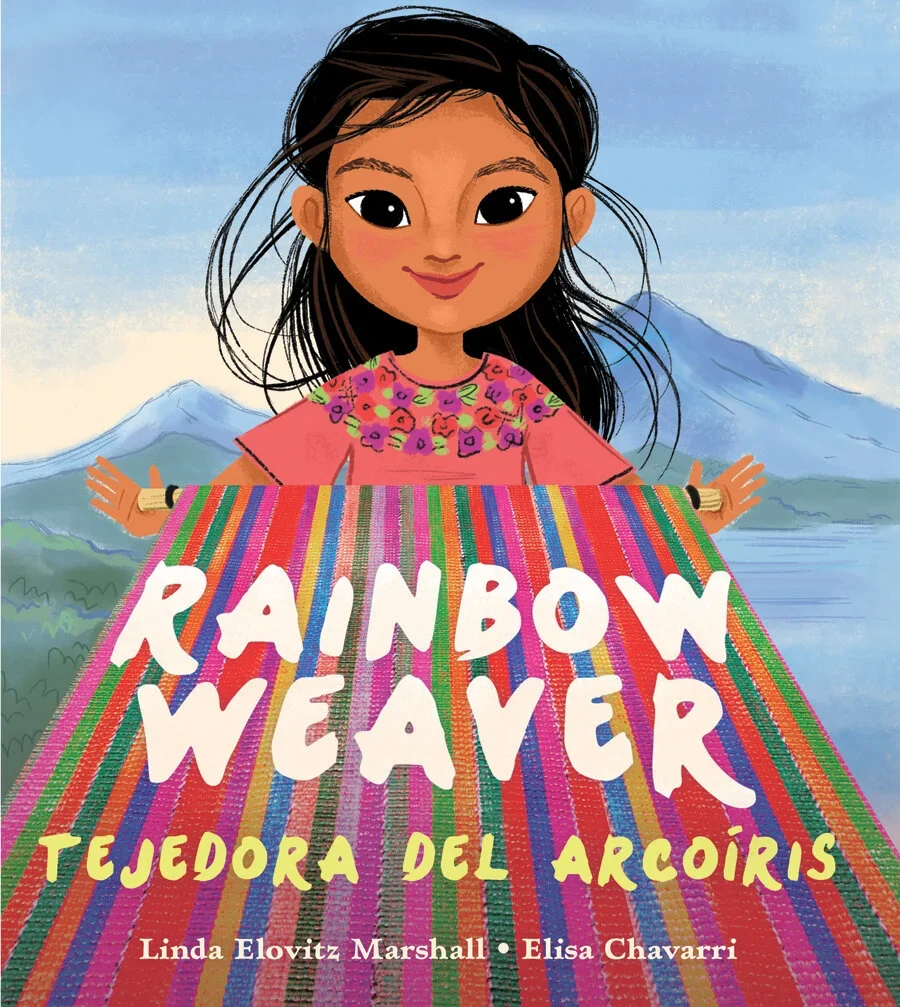
At Douglas MacArthur Elementary in Alexandria, Sara Mumbauer and Megan Gibiser used Abuela’s Weave and Rainbow Weaver to teach about Central America. They adapted a lesson on Rainbow Weaver by former Alexandria art teacher Abby Dillingham to teach about how we pass down cultural traditions, explore the geography of Central America, make text to self connections. The lesson also explored the visual arts, specifically the tradition of weaving handed down for centuries from the Mayan Indigenous people whose descendants still make up a large population of Guatemala today. [2025]
Postcards From Central America
Language arts and English teacher Jeffrey De Avila at Alexandria City Public Schools in Alexandria, Virginia adapted his lesson mid-unit to include migration stories from Central America, eventually co-leading Central America Culture Week at his school. De Avila shared that:
Pairs read age-appropriate testimonies from Guatemala, Honduras, and El Salvador, then wrote “I-statements” to practice empathy and evidence-based inference, supported by an English/Spanish academic word bank. For the summative piece, students created a bilingual “postcard from Central America”: original art on the front and a concise, sourced paragraph on the back. We closed with a gallery walk using a mini-rubric (accuracy, clarity, empathy). School-wide, I co-led a Central America Culture Week — student-made map exhibit, daily bilingual announcements highlighting one country, a cafeteria “taste of Central America,” and a music showcase—giving our community a nuanced, student-led picture of the region. [2025]