
Ecological Injustice
By Olvin J. Abrego Ayala
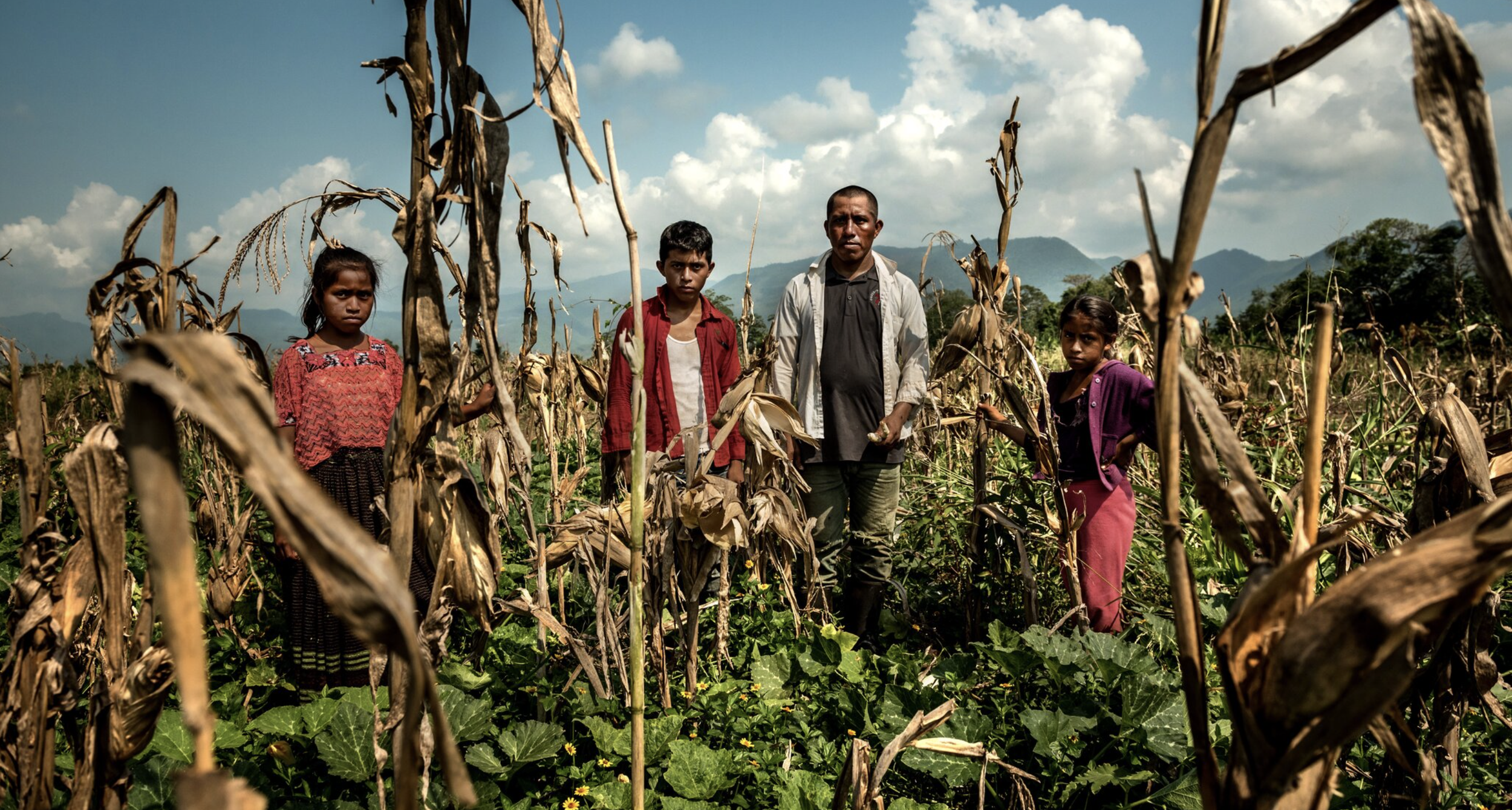
ALTA VERAPAZ, GUATEMALA — Carlos Tiul, an Indigenous farmer whose maize crop has failed, with his children. From “The Great Climate Migration,” The New York Times.
Central America serves as a poignant example of environmental injustice. Despite its minimal contribution to global carbon emissions and greenhouse gases, the region bears a disproportionate impact of climate change. This disparity has resulted in significant environmental obstacles, such as droughts, pests, loss of biodiversity, depletion of resources, and food shortages. The Central America Dry Corridor (CADC) emerged as a meteorological term following the El Niño event in 2009, highlighting the severe consequences of extreme droughts in the region. This situation exacerbates pests and reduces yields for rural farmers. Coupled with natural disasters like hurricanes and floods, Central America is in a precarious state. These countries lack the infrastructure required to implement effective mitigation strategies. Similar challenges are faced by other nations in the Global South, including Bangladesh, Somalia, Afghanistan, and Palestine.
Canada, the United States, and China are exploiting Central America’s rich natural resources — leading to conflicts over land rights, mining, deforestation, and other extractive industries. Central American governments, with the support of international entities, have utilized various tactics, such as surveillance, harassment, and legal prosecution to suppress dissent and silence activists.
In some cases, activists have been subject to extrajudicial killings or forced disappearances perpetrated by state agents, paramilitary groups, and criminal organizations. Such was the case of Goldman Environmental Prize winner Berta Cáceres, a Lenca environmentalist murdered for defending the Gualcarque River from a hydroelectric dam.
Indigenous/campesino leaders, community organizers, and grassroots activists are key in mobilizing their communities and leading environmental campaigns. Their leadership often stems from traditional governance structures, communal decision-making processes, and collective solidarity. These groups have faced marginalization, discrimination, and dispossession of their lands and resources, and bear the brunt of environmental injustices. Environmental activism becomes a means of asserting their rights, reclaiming their territories, and challenging systems of oppression. For Central Americans, the climate crisis is not a problem of the distant future; it’s a current reality.
Despite migration stereotypes casting economic pressure as the main reason many people flee their homes, many Central Americans have to leave their communities due to drops in crop yields, floods, and natural disasters like hurricanes forcing them to migrate north. Their migration is invisibilized, and proper wording like “climate refugee” has not reached a formal definition, recognition, or protection under international law. Climate refugees face violations of their rights during migration, including discrimination, exploitation, and lack of access to basic services and protection.