
Rigoberta Menchú Tum
GUATEMALA
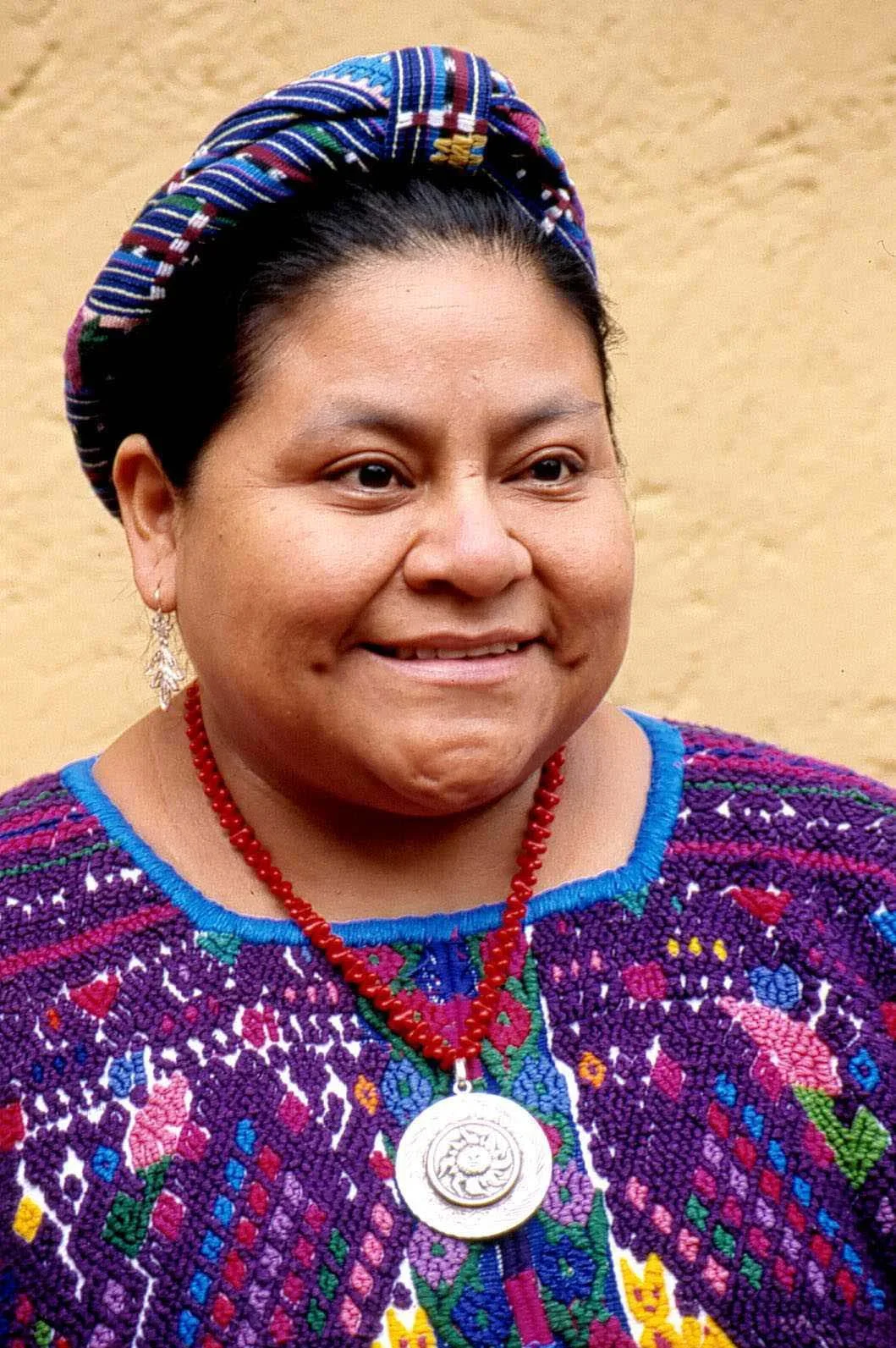
(1959– ) Rigoberta Menchú was born in Chimel, Guatemala to a K’iche’ Mayan peasant family. Growing up, her family had little money or land and spent long hours picking coffee on large plantations which paid them poorly and always kept them in debt. From a young age, Menchú was active alongside her father, advocating for the rights of Indigenous farmers. Menchú became active in movements within the Catholic Church for social reform and women’s rights — demanding higher wages, better working conditions, and respect for human dignity. The Guatemalan government arrested, tortured, and killed her family. This only deepened her courage, and she joined the Committee of the Peasant Union and the 31st of January Popular Front, rebel groups in the Guatemalan Civil War. In 1981, Menchú was forced to flee to Mexico, and there she dicatated the book I, Rigoberta Menchú: An Indian Woman in Guatemala to anthropologist Elizabeth Burgos. The testimony gained her international renown, and in 1992, she won the Nobel Peace Prize for her work on behalf of indigenous rights. She is the author of The Girl from Chimel, The Secret Legacy, and The Honey Jar. She continues to advocate for indigenous rights, and ran for the Guatemalan presidency in 2007 and 2011.
Looking for more teaching materials?
Search the Classroom Resource Library to browse resources by reading level, resource type, theme, and country.