
2025 Central America Celebration of Learning at Bruce Monroe @ Parkview Elementary
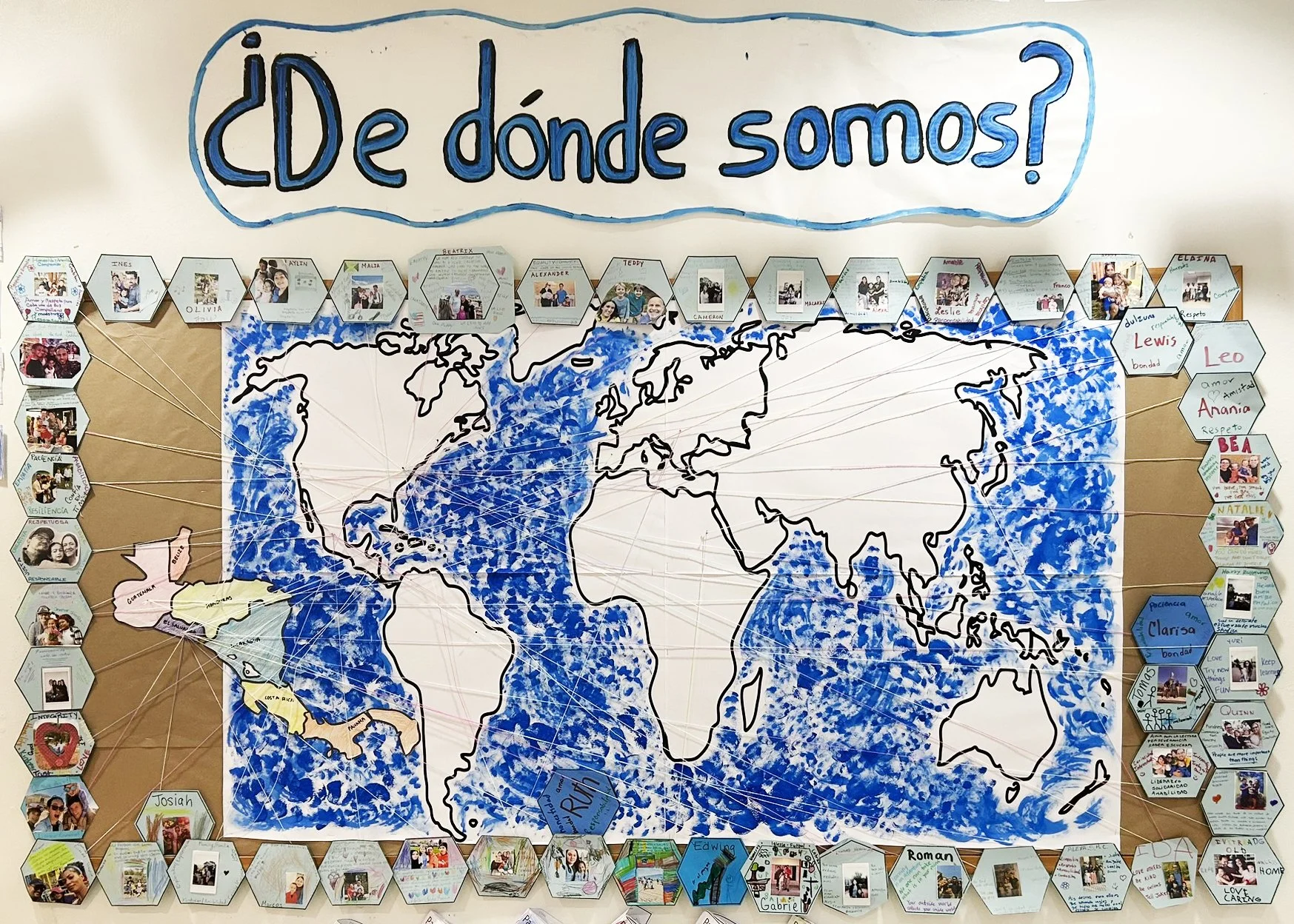
For the past six years, the staff and students at Bruce Monroe @ Park View Elementary School in Washington, D.C. have dedicated six weeks in the early fall to a schoolwide, dedicated focus on Central America. Their study culminates in a community showcase.
Coinciding with the school’s first quarter theme of identity, the unit of study allows students to learn about and honor their own family history and of their peers. (More than 50% of the student body has and many of the staff have ties to Central America.) Many art projects were animated by student’s identity — the unique choices that they make to create pieces of writing and works of art.
The curriculum drew on resources from the school’s collaboration with Teaching for Change’s Teach Central America Week and the Pulitzer Center 1619 Project Educator Network. (The school takes a similar in-depth approach to a study of the Black Lives Matter principles in February and March each year.)
The description below is based on our volunteers’ (Andrea Vincent and Marcy Campos) observations and detailed descriptions from the assistant principal, Dr. Tamyka Morant.
During the two day showcase, student learning was displayed for their peers, family, and community. Hallways, turned into exhibitions of student learning, were festooned with anchor charts, student art work, zines, performances, digital resources and activities that allowed visitors to learn about and interact with the knowledge teachers and students had constructed. Students invited visitors to huddle around their art work and writing and to share their learning process.
Early Childhood
Objectives
“The fabrics tell stories” Identity, culture, and connection.
Students will learn key vocabulary and characteristics of clothes. They will learn about traditional designs, fabrics, materials used and clothes worn in Central American countries such as La Mola, Boruca, Huipil, La manta, and Kiwis. These reflect a blend of indigenous, mestizo, and Afro-Caribbean influences. They are a symbol of culture and pride conveying joy and tradition. Students also create their own clothes design inspired by one of the cultures they studied, reflect on their favorite article of clothing and clothing design and work together to create a quilt with each square including a symbol chosen by the student with an explanation.
Guiding Questions
What do the style and fabric of clothes tell us about the history and culture of different countries in Central America?
What article of clothing is my favorite? Why?
What are my favorite colors in clothes?

Kindergarten
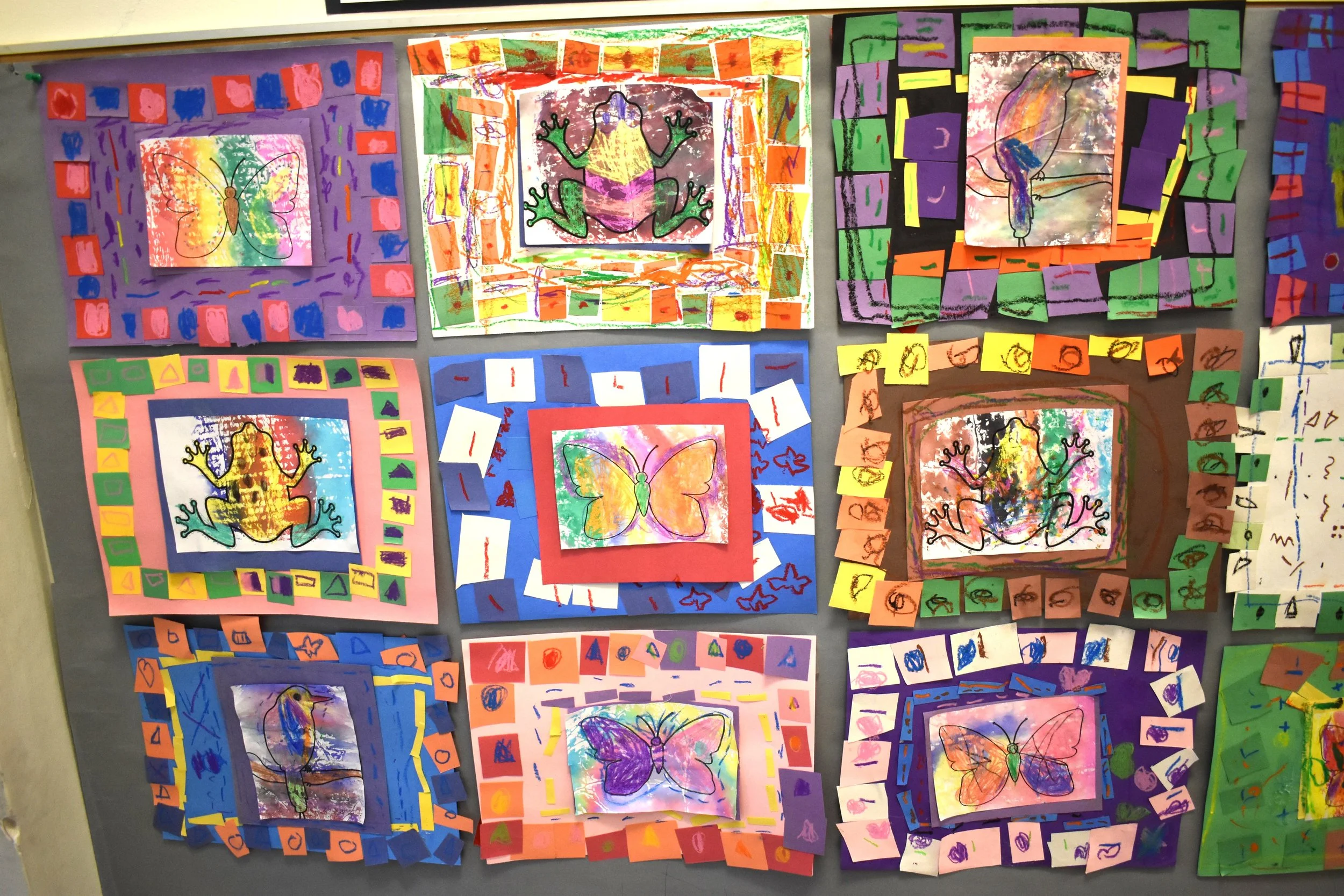
Kindergarteners learned that Central America and Mexico are home to more than 7,500 species of butterflies. This biodiversity strengthens the environment. Similarly diversity in the human community can also be a source of strength. With this in mind, students explored line, color and shape to paint their own butterflies.
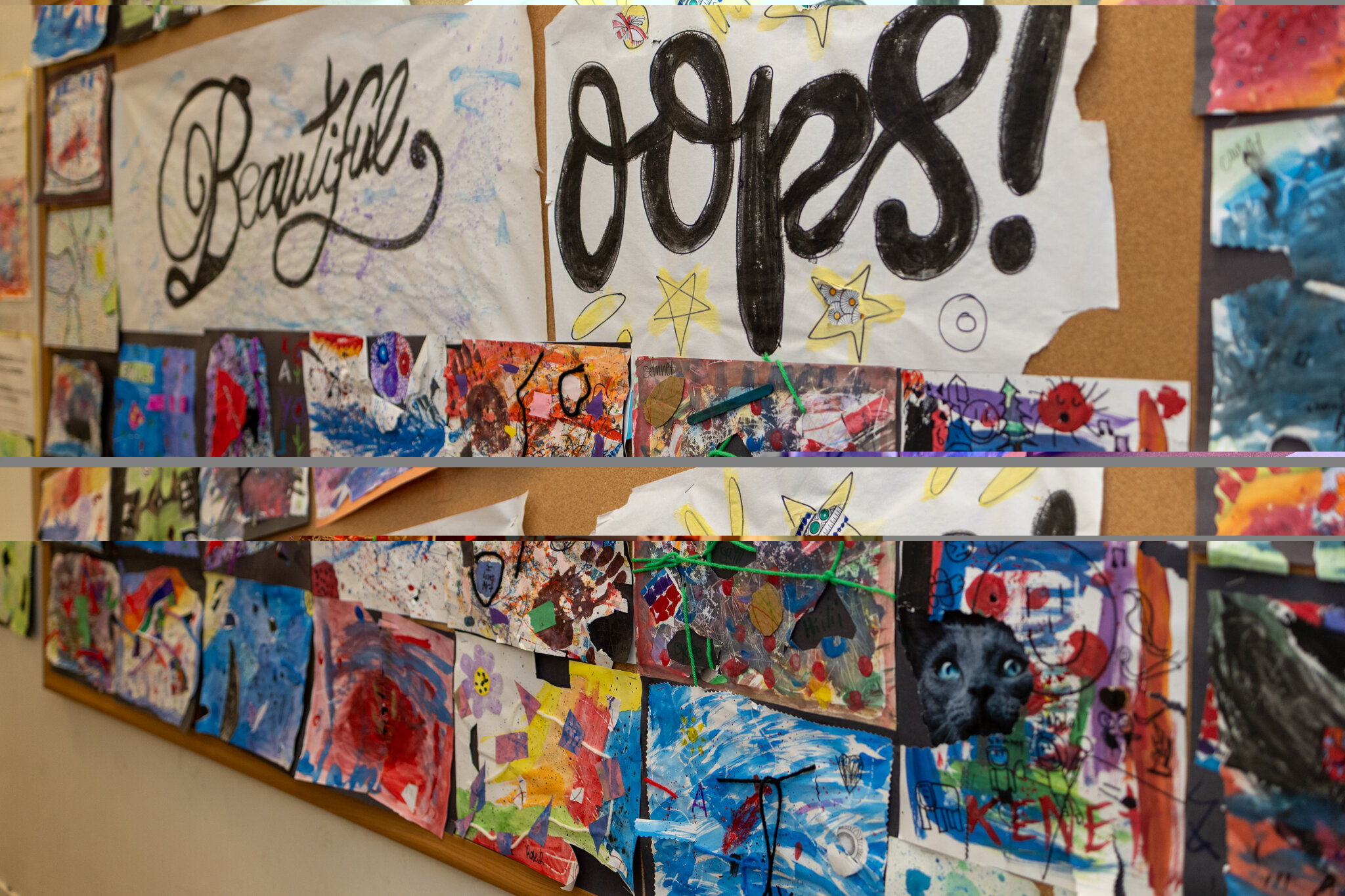
The unit contained the essential question: How can you embrace learning by making mistakes? The hallway exhibit contained a bulletin board of students' works Beautiful OOPS.
Objectives
To deepen our understanding of the different schooling experiences in Central America, we dedicated five weeks with intentional Project Zero thinking routines to merge all the information learned into one final product. Students retell stories based on in-class interviews with families and staff members who shared their experiences of going to schools in Central America.
Students were able to engage in the critical thinking tasks of comparing and contrasting the school experiences in Central America with their own school experiences. They also identified aspects of their school experiences that were special. Finally, students created artwork retelling the stories they learned about Central America.
Guiding Questions
What do stories teach us about people and their lives?
How are the characters in the stories similar to me? How are they different from me?
How do we remember and share the important parts of a story?
How can we tell our own stories so others can understand us?

First Grade
Objectives
Students read Rainbow Weaver and worked with activist Sonia Umanzor to better understand how art and traditions offer opportunities for cultural connection and reflection on the value of our roots.
Student work is anchored in the tradition of textile weaving from Guatemala and Central America and reflects student self, social, cultural, and language identity developed from reading poems in the 1619 text, Born on the Water. This helped students plan how to represent their identity in their textile projects. Students wrote personal narratives about their own identities, reflected on facts they learned about Central America
Guiding Questions
Where am I from? What people and cultures originated in Central America?
How does art reflect the culture and environment of the people?
How does creating art help build community and feed the identity of the community?
How can art represent my different identities?
How is art/tradition (like inherited traits?) passed down generation to generation?

Second Grade
Second graders learned about Central America by exploring family roots and their personal, social and language identities. The goal was to better understand themselves and others, and to celebrate, honor and respect those who worked hard to come to this country.
Anchor charts defining the concept of social identity as presented by the teacher, showed students applying the concept to themselves. They wrote things such as “I’m a girl. I am from Salvador. I”m 7 years old”; “I’m from DC and I’m a boy. My family speaks Spanish.” “I am half-Jewish and I speak Amharic and Oromo and English” “I am an older sister.”
My Community and Me, an extended writing project, had second graders write about three small moments in their lives that were connected to their identities. The books displayed told stories of going to church and feeling shy, the first day of kindergarten, and going to the beach with family. Second grader Josiah wrote about only speaking one word of Spanish on his first day of pre-school, having to learn more words and having his mom kiss him to make it better.
A cut-out of a child in colorful construction paper served as the backdrop for students to consider their roots and wings. Students posted on the roots of the tree examples of what grounds them such as their values, important people, the birth place of their ancestors, and places that make them feel happy. On the leaves of the trees they posted their wings- or how they imagined their future. Students and adults visiting the exhibition were asked to add their answers.
Some responses for wings: Becoming a soccer player, visiting Oaxaca, Mexico traveling to Pennsylvania and New York.
Responses for roots: mom, dad, grandpa, my community, diversity, students.

Objectives
We defined and gave examples of key vocabulary including social, personal, and language identities, equity, privilege, and justice. We studied images from Central America using the Notice, Wonder Math image talk routine, which helped us identify and compare and contrast key attributes of different countries in Central America.
We recognized aspects of social, personal, and language identities in our own lives. We then chose three small moments in our lives that are connected to the identities discussed, and then we wrote three stories about our identities by turning our small moments big.
Guiding Questions
“How does my identity play a role not only in my community but outside of it as well?”
What is my identity?
How is life easier for others, but harder for others? Where have I observed this?
What do I do when I face or witness unfairness?
How does my identity connect me to my community?
Third Grade

Objectives
Students engaged in a study to learn about the murals in Washington, DC that were created by a Latine mural artist or represented the Latine community and to advocate for the preservation of these murals and a replacement for the Latine based murals that have been destroyed since their creation. Students interviewed different Latine muralists and engaged in several Project Zero thinking routines to analyze existing murals in DC by Latine artists. Students wrote an informational piece about a Latinx artist and the significance of their mural, and students wrote an informational piece about their own mini mural and how it highlights aspects of their own identity.
Guiding Questions
How is art a form of resistance?
How do Latinx artists in Washington DC share their stories, culture, and history through art?
How does this artwork make me feel?
What do I connect to in this piece of art?
How does this mural exhibit joy and/or resistance?
How can I share my identity through symbols, colors, shapes, etc. in my own art?
Fourth Grade
The 4th grade’s project was called Voices of the Forest. The essential, guiding question was how do people use language to resist oppression and preserve identity. It’s a connection of identity, land, and culture. All of the units are grounded in identity, so they start off by unpacking identity. They learn the difference between their personal and social identities, and what their ancestors can teach them.
They began by writing personal narratives about important times in their lives and trying to again connect it to their identity. All the students wrote about a particular moment that shaped or informed their identity.
They share a short biography about themselves using descriptive language, identity, culture, and experience. Then they produce an oral biography. Each student tells their personal story that they wrote, building verbal and presentation skills. Since a lot of our students are Central Americans, that comes through in their text and stories.
They read Born on the Water as part of the 1619 Project collaboration, and they made connections between the voyage of the book for Margarito’s Forest. They trace and connect the voyage of the Middle Passage to the Spanish voyage to Central America and the impact on the Mayan people. They talk about colonization and what that means and how that works. For example, Spanish is spoken in Central America as a result of Spanish colonization.
In math, the skill that they’re working on for this quarter is rounding a number comparison. So they applied that skill to the original languages of Central America. They constructed a graph of their data to make visible the impact of deforestation and how that also impacts language, identity loss, and preservation. They sought to demonstrate why it is important to preserve Indigenous voices and how our own identities connect with global stories of justice.
In music they had a rain stick and they made different melodies.

Objectives
Students engage in understanding power, privilege, justice, and equity by analyzing how historical events like colonization and enslavement have shaped language and identity, and by using writing, math, and advocacy to amplify marginalized voices and promote cultural preservation. Their work reflects criticality by connecting personal stories to broader systems of oppression and resilience.
Students reflect on their own cultural and linguistic identities through biography writing and identity charts. Students study Central American and African diasporic experiences through El Bosque de Don Margarito and Born on the Water. Students analyze how power, privilege, and colonization have impacted language, land, and culture. Through the “Voices of the Forest” project, students use math and writing to advocate for environmental and cultural preservation.
Guiding Questions
Who decides which languages and cultures are valued or erased?
How can we use our voices and knowledge to stand up for justice and equity?
How do Central American cultures, especially Mayan communities, contribute to our understanding of land, language, and tradition?
In what ways are the stories of enslaved Africans and Indigenous Central Americans connected?
Fifth Grade
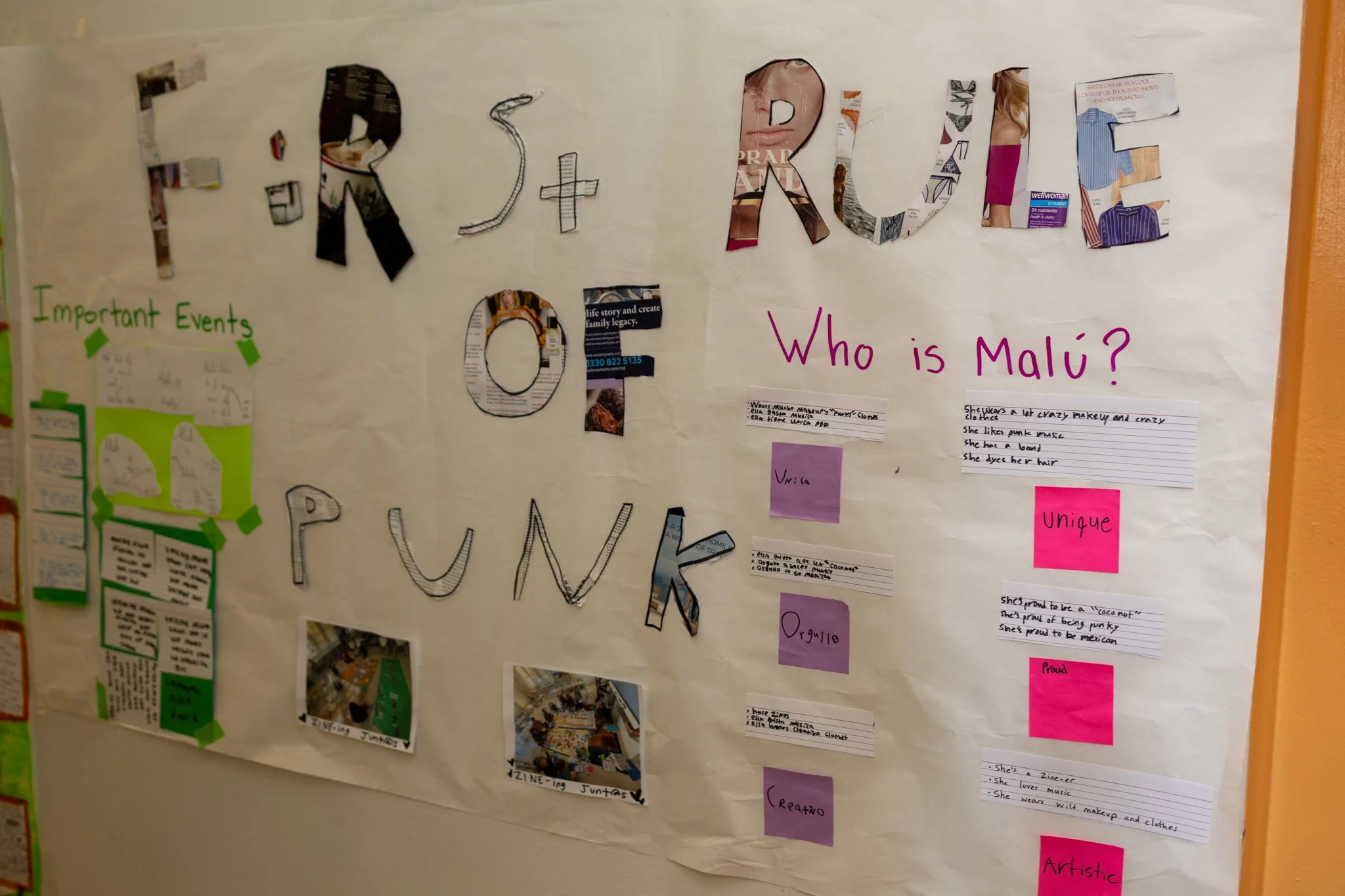
The fifth grade did a study of the book The First Rule of Punk. While the protagonist is Mexican-American, her experiences resonate with the Central American students.
The students took on the role of journalists for this unit. Two of those reporters described the class projects to the Teaching for Change visits.
Solomon
Hello, my name is Solomon, I’m in 5th grade, and this is my partner Leo, who is also in 5th grade. I will be talking about the journalism unit and how we’ve made articles for our first school newspaper about any topic we choose.
We have a press packet that shows who we are, identified grade by grade. Each class worked on a different grade and interviewed them and then transformed them into an article, which then the vice principal edited and made it into an article.
Now, you were asking how we did it? We did it over the course of three weeks by first coming up with the idea, working with our partners and getting used to them, and then we interviewed the grades. It took us a long while to learn how to transcribe the notes into an actual article. But, of course, at first we did a rough draft.
And now, over here, all the way over here, we’re going to talk about the First Rule of Punk book we’ve been studying, and here to tell us about it is Leonardo.
Leonardo
Okay, so over here is our First Rule of Punk, the book we’ve been working on since the first day of school. Here’s our main character Malú. To make this picture we actually had to have a person lie on the paper while another kid had to draw her or him. She’s really unique and punky, and she wants to fit in at her new school, since she moved from Florida to Chicago. And she has a lot of traits: she’s unique, she’s punky. But her mom wants her to be a senorita, like a Mexican who likes to sell cilantro, like a vegetable. But she just wants to fit in, and each time, every single day she’s asking where her people are. And she makes a lot of zines, for example this There’s No Place Like Home, that’s the zine right there. That’s her self portrait.
And if you come over here, there’s more, too. We can talk about our identities and show who we are. Here’s our posters about our identities.
Solomon
Over here, below the zines, each and every student has made a family artifact representing any part of their identity or their family and the history they went through, their family roots, what they’re like, who they are. As an example, this kid Sabina loves fantasy, magic, dragons, and boats, so she drew all of those. And there are more complicated versions of that all around here — poems, pictures, sentences of who we are. And Leonardo will tell us more about what this project is about.
Leonardo
This project is about our family roots on how they got to the U.S. and their identities. For example, people drew about their families, like this one over here, my cousin drew that. And if you go over here, some families survived the Holocaust, and a lot of different countries. There’s a lot of options that you can write — pie charts, the story of your name, or you can write about your family roots.
For example, this one here is mine. My grandpa and grandma had to escape a country called El Salvador because there were shootings everyday because of the civil war in El Salvador. People died every single day. People were scared to go outside, they got robbed and mugged a lot of times. Sometimes people even broke into houses.
Solomon
And thank you for viewing the 5th grade’s presentation. Next year it might be better or it might be worse; we don’t know.

Guiding Questions
How does Malu’s (a character’s) identity change over the course of her story? How has my identity changed over the course of my story?
Who Am I/Who do I want to become?
How does Malu express who she is? How do I express who I am?
Why do we study Central American people, culture, and contributions at BMPV?